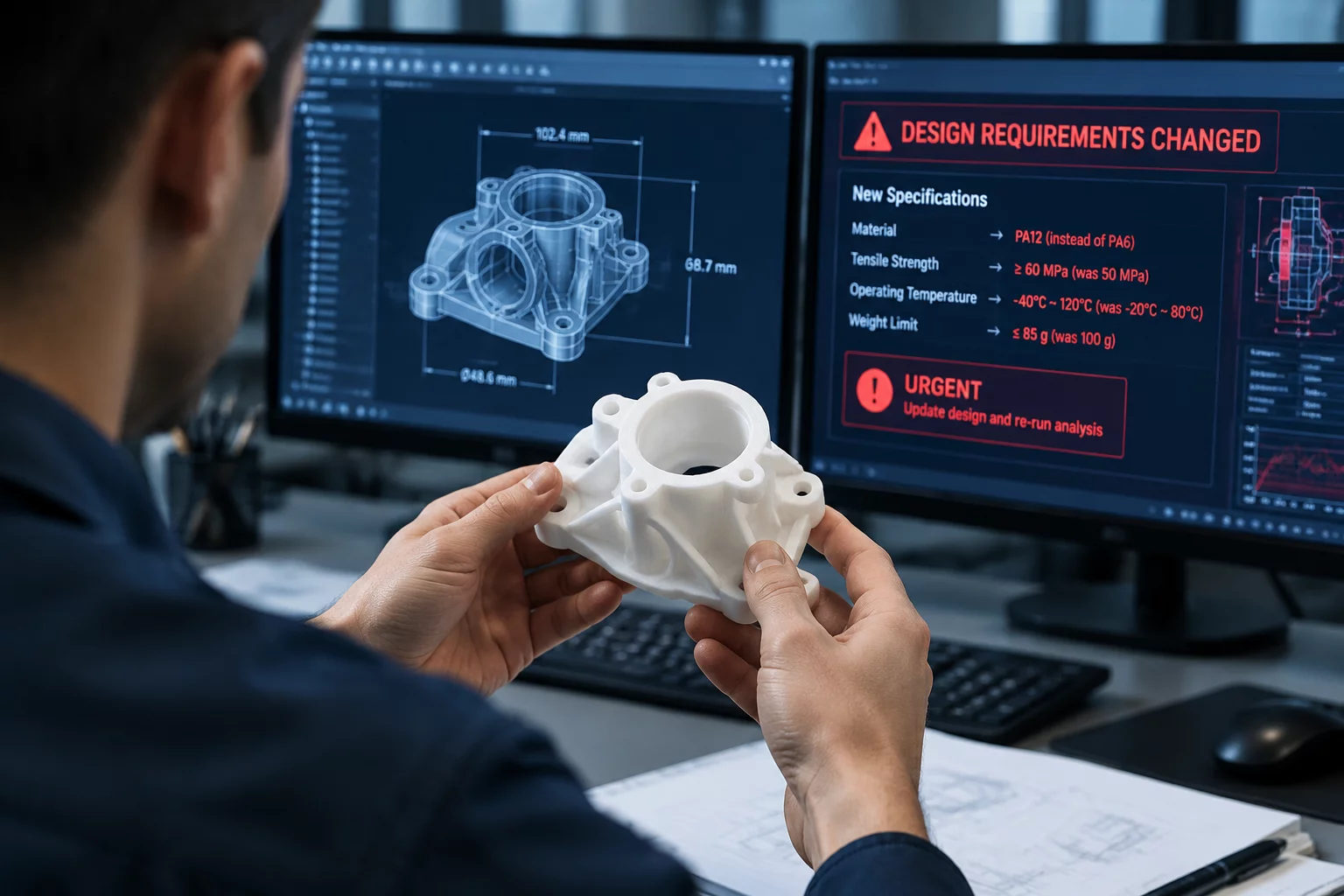
The Specification Shock and Baseline Breakdown
In week fourteen of an industrial agricultural sensor program, customer pilot reports revealed frequent high-pressure washdown exposure and mud immersion in the field. Consequently, the product management group upgraded the product requirement document from an IP54 splash rating to a rigid IP67 continuous immersion standard. Tooling release was scheduled in twenty-four calendar days, putting the entire timeline at extreme risk.
The primary design candidate featured a sleek, toolless cantilever snap-fit joint optimized for ultra-fast assembly on manual lines. Under 1.0 meter hydraulic head pressure, the tongue-and-groove joint deflected outward by 0.35 mm, allowing water ingress in under ninety seconds. Forcing a dispensed liquid silicone gasket into the existing geometry resulted in joint latch failure due to internal hydrostatic backpressure.
A late requirement change is catastrophic only when past exploration has been discarded. Disciplined concept branches serve as active engineering insurance.
Rather than starting a frantic blank-sheet redesign or attempting to patch an inherently flawed snap-fit geometry, the engineering team turned to their parallel concept archive created during the preliminary architecture phase.
Re-Examining the Three Archived Parallel Branches
Three early concept models had been preserved alongside their original CAD feature trees, moldflow analyses, and trade-off matrices. The engineering team pulled all three models into an emergency evaluation session to assess adaptation feasibility:
Overmolded TPE Lip
A dual-shot injection molded elastomeric lip along the enclosure rim. Eliminated loose parts but added six weeks to tooling fabrication schedules.
Continuous O-Ring Channel
A molded dovetail gland housing a continuous fluorosilicone cord, compressed via six perimeter threaded fasteners and brass inserts.
Ultrasonic Energy Director
A permanent shear joint welded via ultrasonic acoustic horn. Guaranteed zero water ingress but completely eliminated field battery servicing.
Because preliminary FEA and draft angles had already been documented during initial concept generation, the team avoided weeks of exploratory trial-and-error. They immediately zeroed in on the exact mechanical implications of each option.
Convergence Decision and Rapid Verification
Branch Beta was selected as the optimal convergence path. Branch Alpha was rejected because the tooling lead time would miss the hard launch window, and Branch Gamma failed the mandatory battery serviceability requirement. The team refined Branch Beta over a four-day sprint, updating fastener spacing to ensure uniform gasket compression without inducing housing wall bow.
- Target Gasket Compression: 28% nominal compression across a 1.8 mm cross-section fluorosilicone cord
- Fastener Layout Strategy: Six M2.5 stainless steel screws with brass heat-set inserts spaced 42 mm on-center
- Perimeter Flange Expansion: Local wall thickness widened from 2.0 mm to 3.2 mm to accommodate the dovetail groove
- Immersion Testing Outcome: Zero moisture ingress across ten SLA prototypes submerged at 1.0 meter for 30 minutes
The presence of structured branch archives compressed a potential six-week project restart into ninety-six hours of focused refinement, preserving both the launch deadline and tooling budget.
Frequently Addressed Engineering Questions
When the new requirement fundamentally breaks core physical boundary conditions—such as sealing, thermal paths, or structural loads—starting fresh risks repeating prior exploratory mistakes. Reopening documented branches provides tested geometry and known failure modes, drastically shortening resolution cycles.
Modern cloud CAD platforms and disciplined branching methodologies allow teams to freeze and tag concept branches without polluting the active production tree. Storing lightweight geometric surfaces and decision records requires minimal maintenance compared to the value of having rapid pivot options.
Treat requirement shifts as standard engineering realities rather than program failures. When teams cultivate a mindset where multiple options are generated as contingency assets, a late pivot feels like a calculated tactical deployment rather than frustrating rework.
Discuss Architecture Pivots
Facing sudden specification changes or exploring parallel concept workflows for your hardware program? Connect with our engineering specialists.
Related Case Investigations
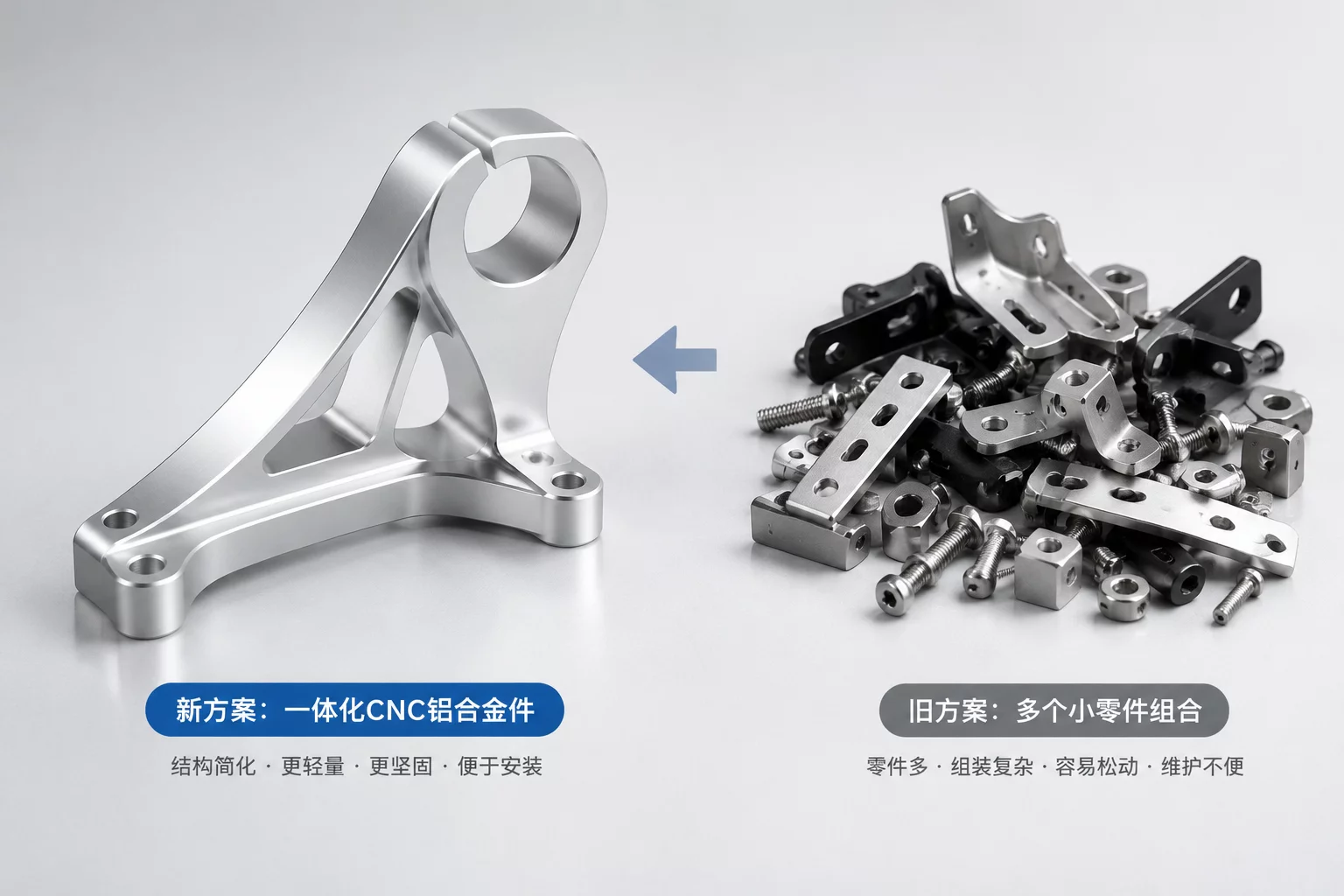 Part Consolidation
The Alternative That Simplified Manufacturing
How consolidating six stamped sub-brackets into an integral unibody extrusion streamlined production line efficiency.
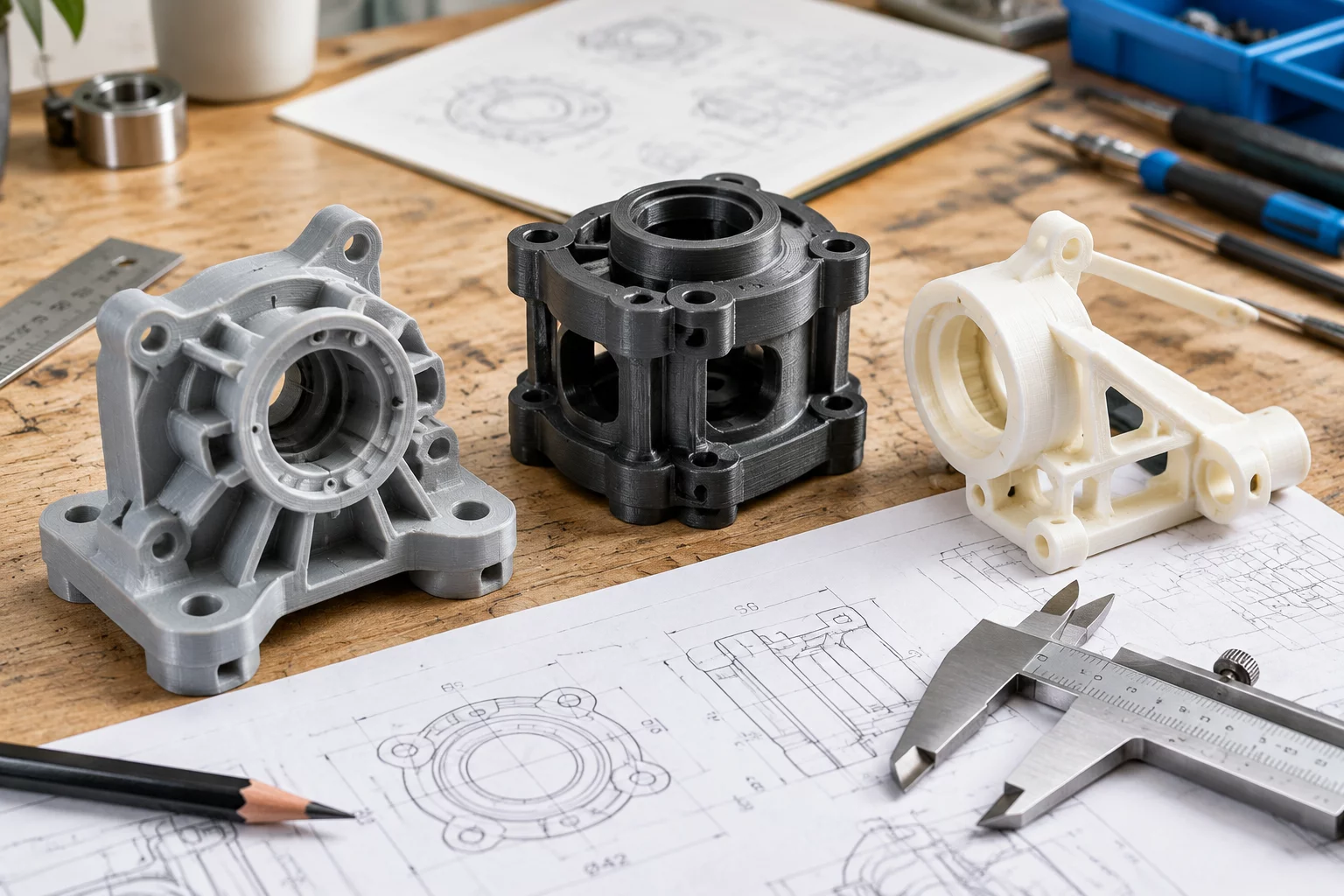 Kinematics
One Constraint, Three Mechanical Concepts
Evaluating three divergent mechanical linkage geometries against an uncompromising 50 mm packaging envelope.
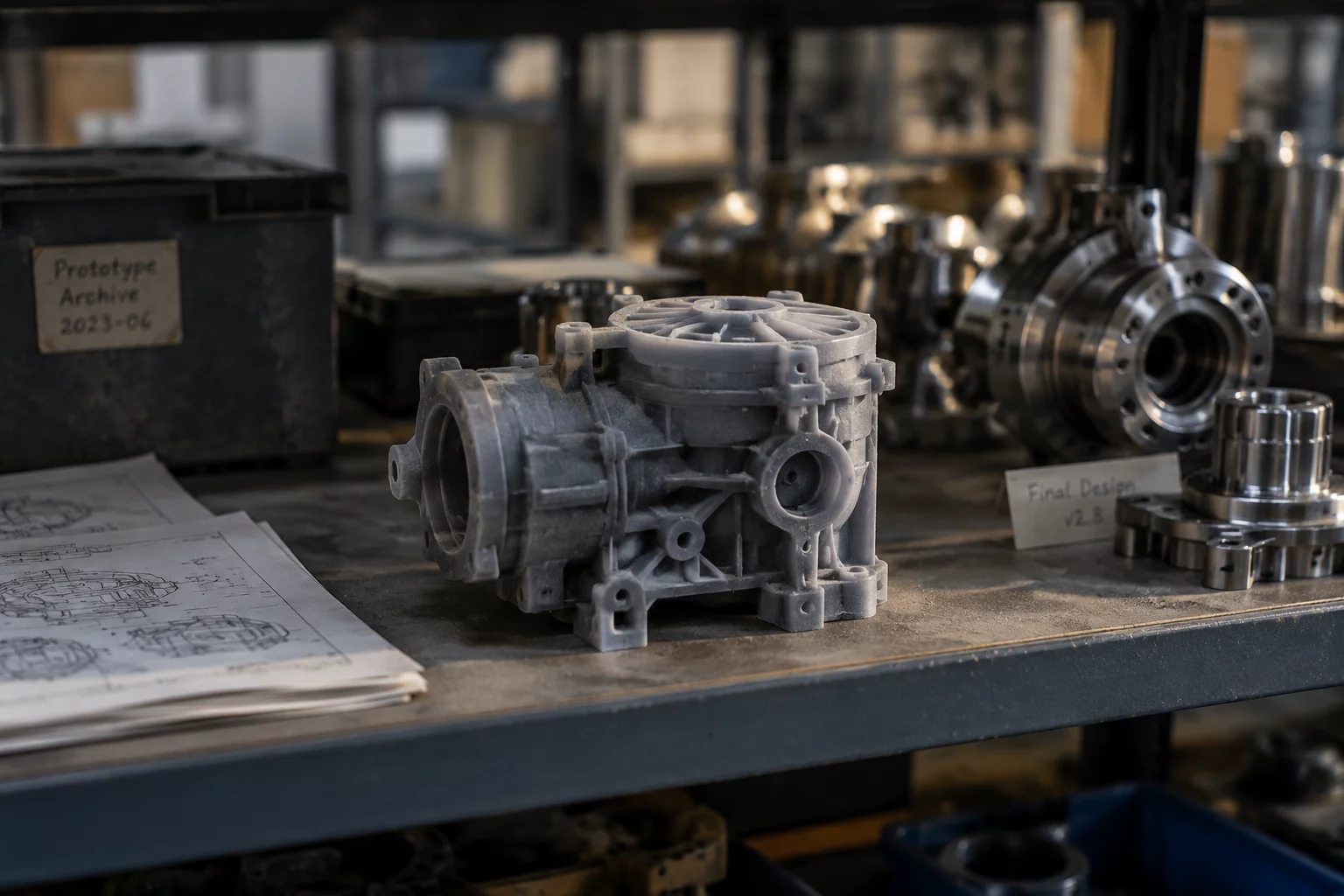 Knowledge Retention
Why an Abandoned Option Still Matters
Why documenting rejected concept trade-offs prevented costly duplicate investigations during next-generation redesigns.