The Cost of Unbounded Architectural Exploration
Early architectural exploration creates significant leverage in mechanical design. Investigating competing kinematic linkages, alternative motor placements, or distinct fastening schemes costs minimal CAD time compared to discovering fundamental flaws down the production line. However, engineering teams often fall into one of two damaging traps: stopping after a single iteration due to false confidence, or spinning off dozens of micro-variations that fail to test genuinely unique physical behaviors.
A disciplined exploration phase does not measure success by the sheer volume of CAD models created. Instead, it measures how effectively each branch resolves specific engineering unknowns. When a new branch only tweaks an existing fillet radius, adjusts bolt spacing by five millimeters, or modifies non-critical wall thicknesses without changing manufacturing strategy or force distribution, the branch provides near-zero informational yield.
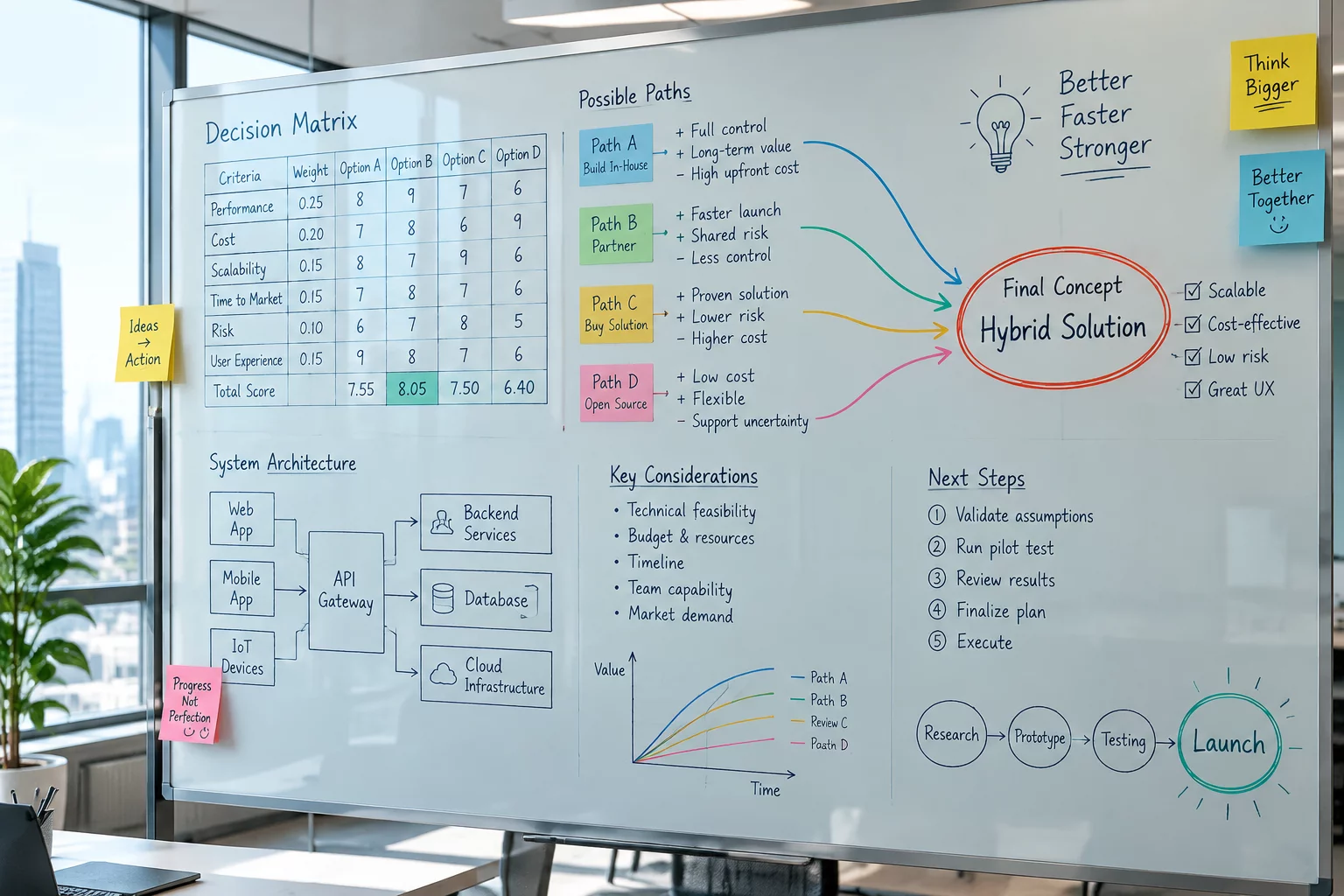
Exploration is complete not when every possible permutation is modeled, but when every major architectural risk has been explicitly tested against baseline constraints.
Establishing formal stopping rules before launching parallel design forks prevents teams from wandering into endless cosmetic adjustments. When every engineer on the squad agrees on what constitutes sufficient evidence, convergence shifts from a subjective debate into an objective engineering decision.
Three Primary Indicators That Exploration Is Complete
Through analyzing dozens of hardware prototype sprints, we identified three concrete indicators that signal an engineering team has gathered enough architectural variance and should initiate convergence:
Asymptotic Risk Reduction
Each subsequent concept variation resolves fewer critical unknowns than the previous one, yielding negligible new technical insight.
Invariant Constraint Conflicts
The same fundamental physical trade-offs (e.g., thermal dissipation versus dust ingress) reappear across all alternative configurations.
Clear Hybrid Path
The winning features of parallel concepts become modular enough to synthesize into a single refined mechanical layout.
Once these signals emerge, spending additional design cycles generating fourth or fifth concepts typically creates project fatigue rather than technical breakthrough. The team's creative energy is better redirected toward detailing the converged architecture and locking down manufacturing tolerances.
Establishing Objective Stopping Criteria
Rather than leaving the convergence timeline open-ended, structured product development teams establish quantifiable gating criteria at the kick-off of each option fork:
- Core Hypothesis Validated: Each parallel branch has proven or disproven its central geometric premise via rapid prototyping or simulation.
- Tool Clearance Confirmed: Fastener access, assembly paths, and technician ergonomics meet designated serviceability metrics.
- Target BOM Envelope: Bill of materials and estimated machining or tooling cycles remain within 10% of target budget bounds.
- Failure Modes Identified: DFM and DFMEA documentation identifies all single-point failure risks with viable containment strategies.
Evaluating candidate designs against these clear gates reveals when an option has answered its core design question. When all viable branches have been scored, the convergence decision becomes transparent to all stakeholders.
Convergence & Gating Questions
Most mechanical hardware projects benefit from exploring 2 to 4 fundamentally distinct concepts. Developing fewer than two risks missing optimal topologies, while developing more than four causes excessive cognitive load and dilutes team focus without proportional design improvements.
If a major requirement shifts (such as a component supplier discontinuation or a structural load increase), teams should revisit the archived parallel branches. Often, a previously abandoned concept already holds the ideal geometric solution for the revised constraint.
Implement a blind scoring matrix using weighted evaluation criteria established prior to CAD generation. Evaluating branches simultaneously against standardized functional, thermal, and manufacturing benchmarks prevents attachment to early legacy sketches.
Review Your Concept Branches
Share your team's current parallel designs and constraint criteria for structured feedback on convergence readiness.
Related Engineering Cases
 Branching Strategy
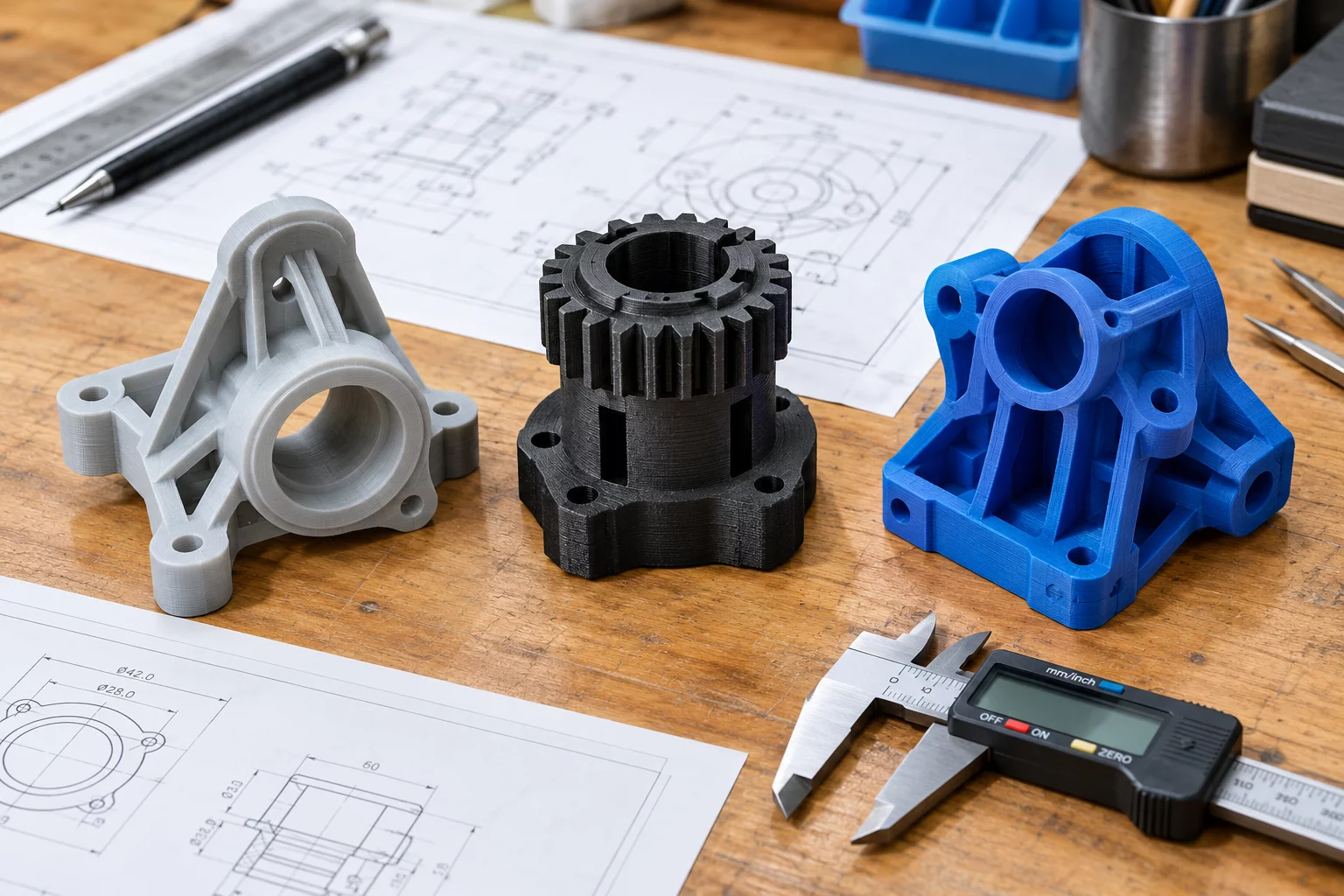
One Constraint, Three Mechanical Concepts
A systematic teardown of how three distinct mechanical architectures solved a strict volumetric envelope constraint.
 Trade-Off Analysis
When Two Good Ideas Solve Different Problems
Examining the tension between rigid structural stiffness and tool-free maintenance access in industrial enclosures.
 DFM Optimization
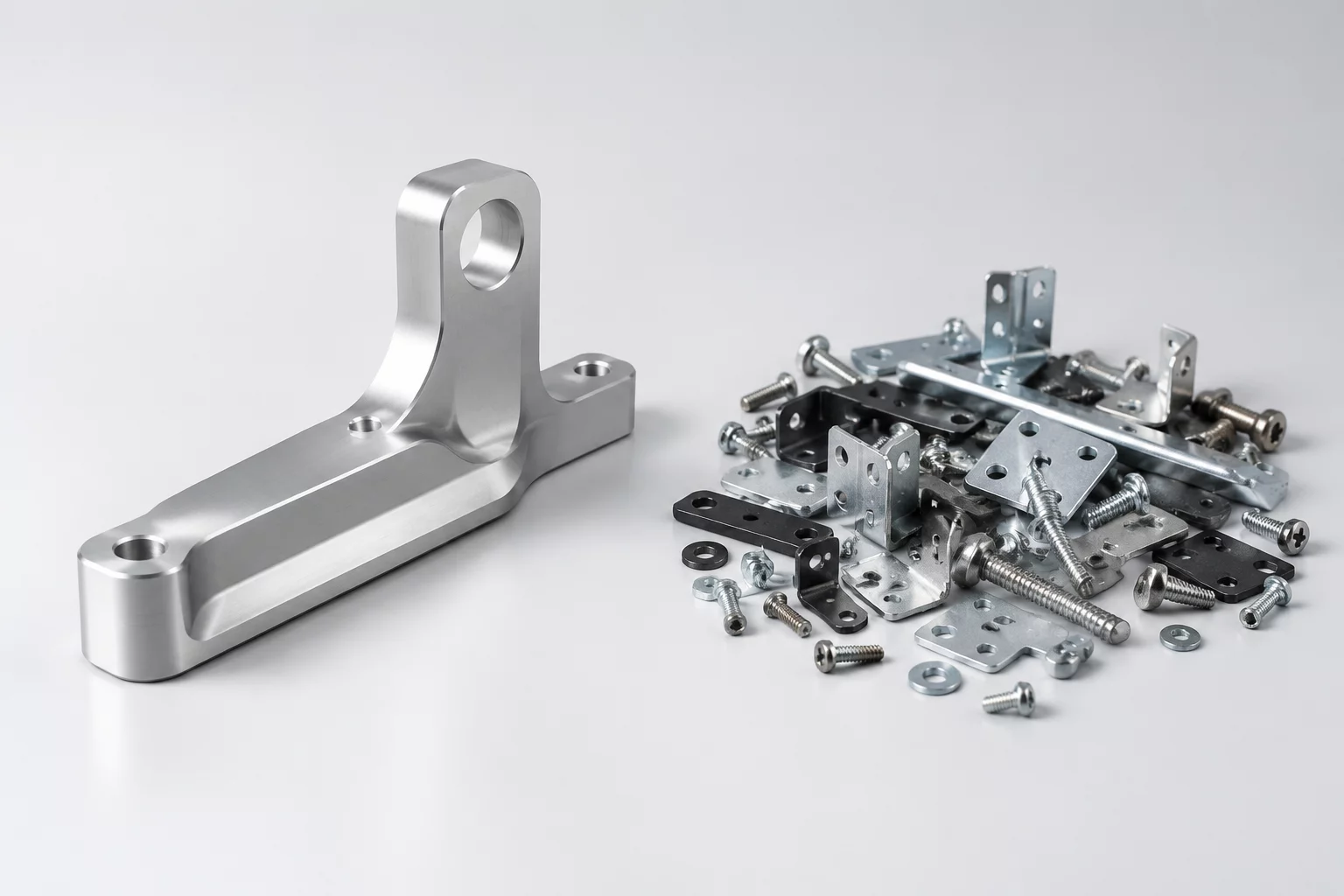
The Alternative That Simplified Manufacturing
How replacing a multi-part sheet metal bracket with a unified CNC extrusion cut assembly time by forty percent.