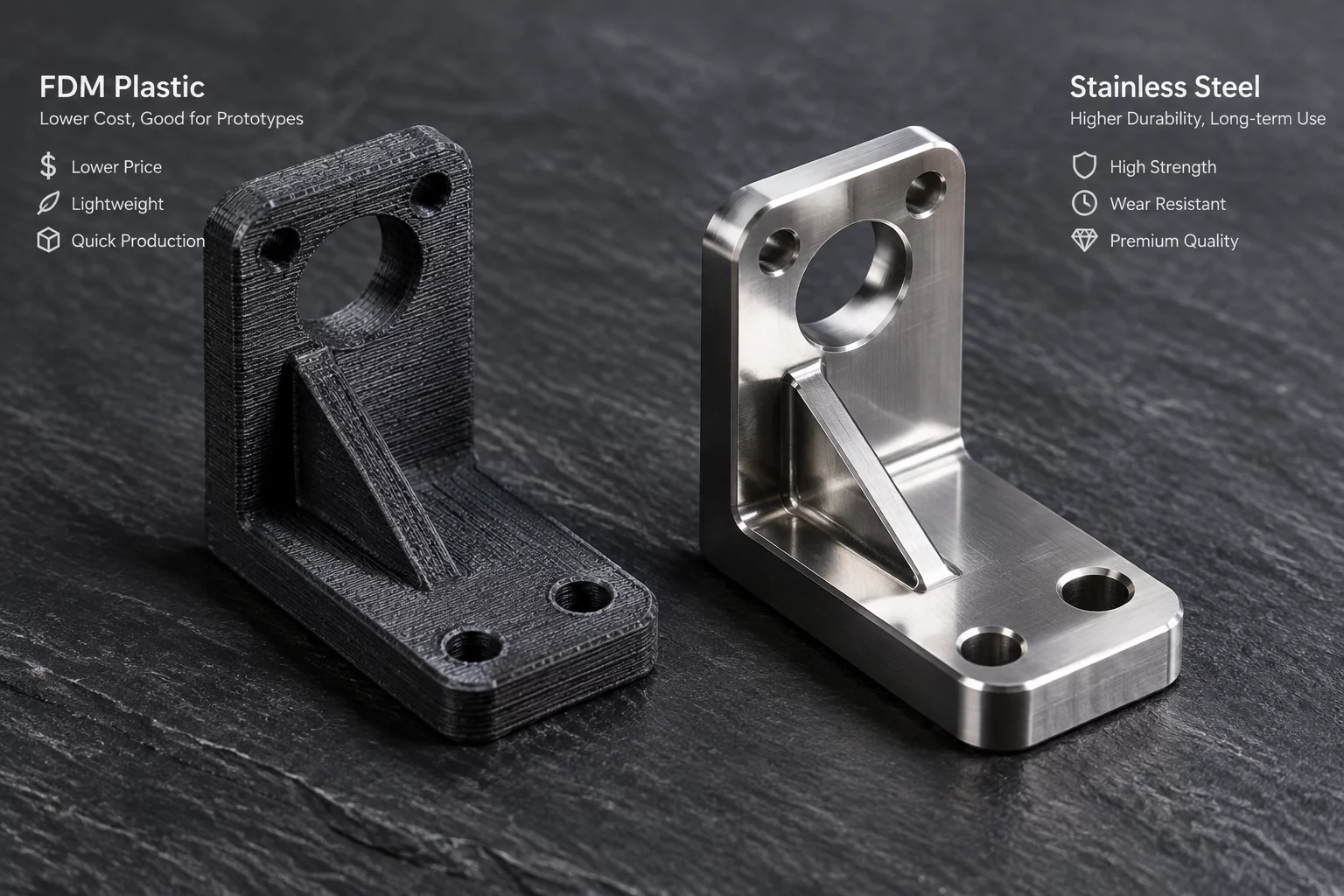
The Divergence: Speed Versus Structural Fidelity
During the second development sprint of an automated handling mechanism, the hardware team faced a classic dilemma: rapid resin prints deformed under 150 N continuous tension, while quote lead times for billet machined aluminum threatened to stall the mechanical validation cycle by three full weeks.
Rushing directly into CNC fabrication without refining geometry would have depleted roughly 40% of the prototype phase budget. Conversely, relying solely on standard FDM filament gave misleading deflection metrics that masked genuine joint fatigue issues.
A prototype that breaks from poor material choice teaches nothing about geometry, while an overbuilt prototype burns the sprint budget before iteration begins.
We decided to fork the prototyping architecture into parallel evaluation tracks, establishing explicit failure criteria for each batch before committing to production orders.
Three Parallel Material Pathways
Instead of picking one compromised solution, we fabricated three discrete prototype variations to evaluate dimensional precision, cyclic fatigue life, and unit cost simultaneously.
Rapid Geometric Check
Low-cost powder bed fusion allowed overnight verification of internal clearances and fastener alignment under zero static load.
Functional Mid-Tier Test
Onyx micro-carbon filament with unidirectional fiber routing sustained 18,000 tension cycles at one-fifth the CNC cost.
Production Convergence
Machined components reserved strictly for thermal dissipation testing and destructive yield point verification.
By isolating geometric fit from dynamic fatigue testing, the team identified three critical stress concentration corners on the continuous-fiber prints before committing the final CAD drawing to production milling.
Empirical Convergence Metrics
Our structured trade-off evaluation provided clear quantitative justification for selecting composite filament over premature machining during sprint iterations:
- Average Unit Fabrication Cost: $18.50 for SLS, $42.00 for Continuous Carbon Onyx, $285.00 for CNC Aluminum
- Iteration Lead Time: 18 hours for in-house additive vs. 14 calendar days for outsourced milling
- Fatigue Threshold Met: 25,000 cycles completed without micro-fracture on reinforced test brackets
- Tooling Risk Mitigation: Two costly design revisions corrected prior to steel injection tool sign-off
Combining reinforced composite prototypes with selective metal inserts enabled complete dynamic qualification at less than a third of the projected initial tooling expense.
Prototyping Trade-Off FAQs
Desktop 3D printing works best for kinematic verification, packaging studies, and assembly clearance assessments where operational torque and thermal loads remain well below resin or filament deflection limits.
Continuous fiber prints provide high stiffness-to-weight ratios and yield realistic fatigue data up to moderate cyclic thresholds, making them ideal bridge prototypes before investing in metal fabrication.
If compensating for a material deficiency requires artificial geometry changes that cannot transfer to production tooling, that prototyping method must be discontinued immediately.
Request Case Insights
Connect with our engineering editors to review testing datasets or share your team's parallel prototyping challenges.
Related Case Investigations
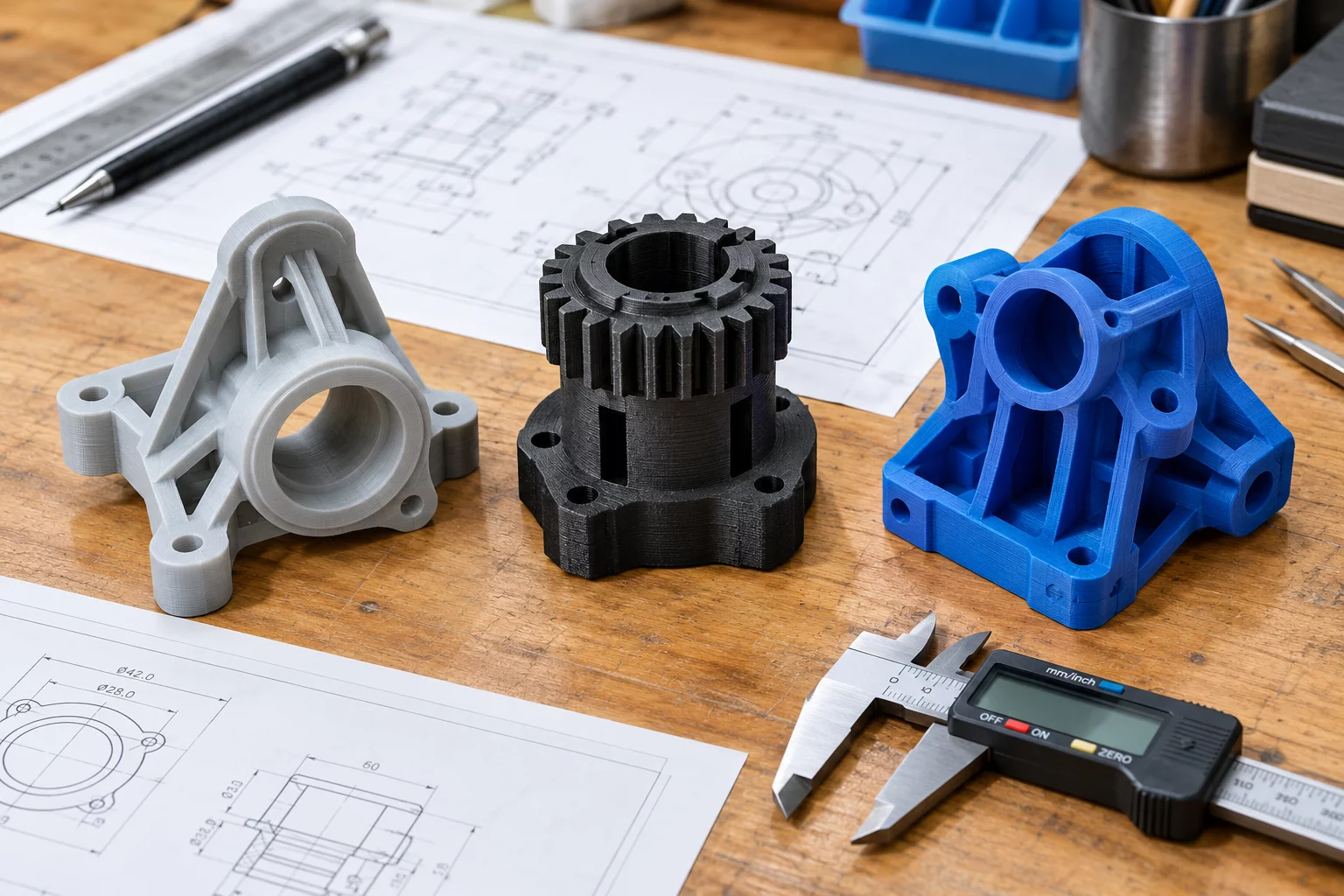 Case Study
One Constraint, Three Mechanical Concepts
How a rigid envelope requirement spawned three distinct gear train configurations before converging on an eccentric drive.
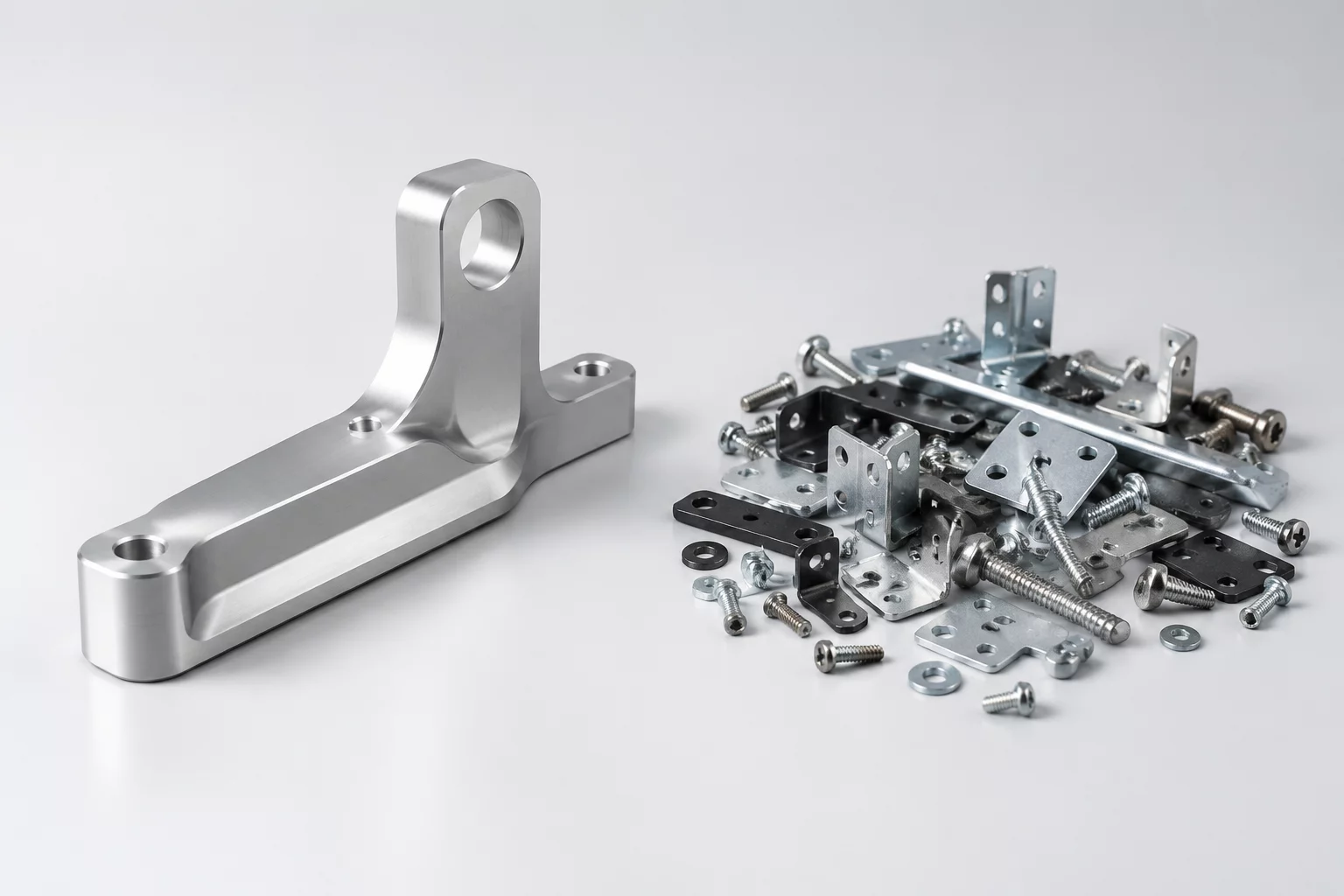 Case Study
The Alternative That Simplified Manufacturing
Replacing a five-piece sheet metal bracket with a unified cast structural element to lower assembly cycle time.
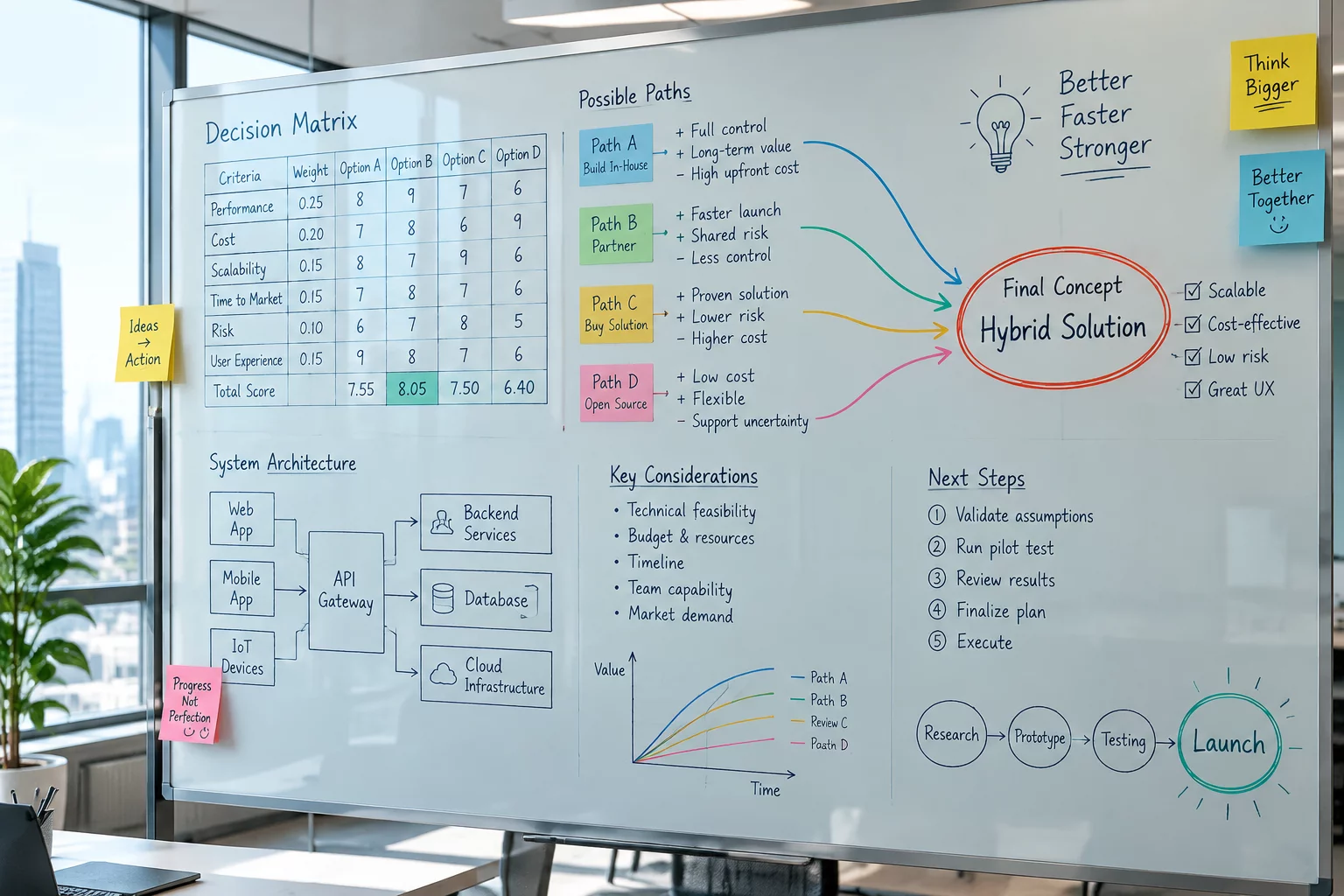 Case Study
How to Know When Exploration Has Gone Far Enough
Establishing quantitative exit gates for parallel concept exploration before committing to production tooling.