Part Count Reduction Strategy
A structured design framework for consolidating hardware components, trimming assembly steps, and eliminating unnecessary fasteners without inflating tooling complexity.
Why Component Proliferation Silently Cripples Hardware Programs
Every extra screw, bracket, and standalone shim introduces an insidious chain of operational debt into a hardware project. During early CAD prototyping, adding five discrete brackets to hold an internal PCB or sensor might seem like a harmless shortcut. On the manufacturing floor, those five brackets multiply into distinct supplier lead times, dedicated inspection fixtures, fastener sorting bins, and five manual torque-driver motions per unit.
The Part Count Reduction Strategy forces mechanical design teams to interrogate every single component against three foundational physics criteria before allowing it into the final Bill of Materials: relative kinematic motion, fundamental material incompatibility, and non-negotiable service disassembly. If a part satisfies none of these three criteria, it is an immediate candidate for geometric consolidation.
A part should exist as a separate component only if it moves relative to mating parts, demands a fundamentally different material property, or requires independent field replacement for servicing.
Evaluate Your Assembly Complexity
Apply our structured DFMA part-consolidation checklist directly to your active sub-assemblies to pinpoint redundant fasteners and split housings.
The Practical Three-Filter Evaluation Process
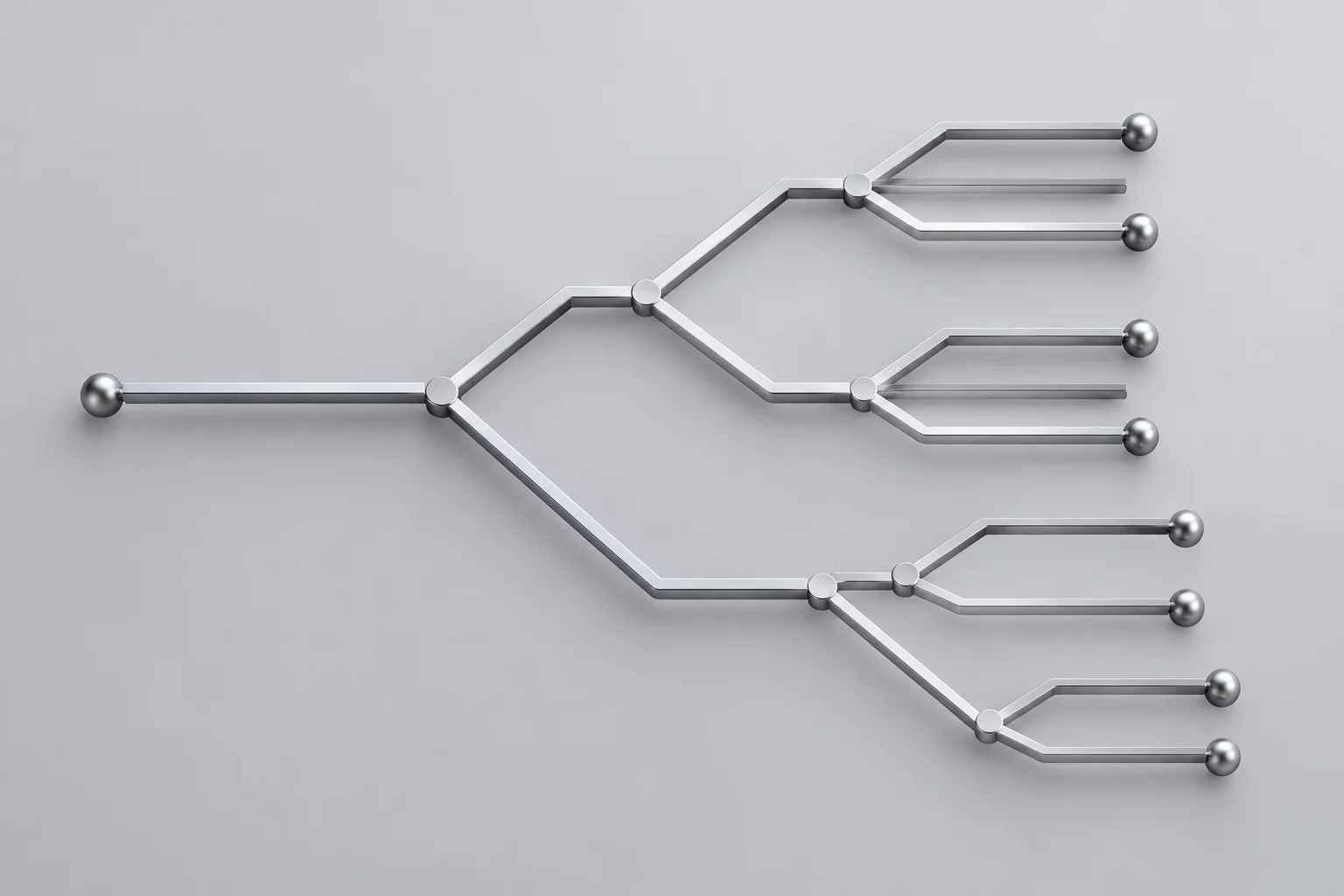
Component consolidation is not about creating unmachinable organic shapes simply to claim a lower part count on a presentation slide. Aggressive consolidation without discipline often produces injection molds with impossible undercut actions or CNC parts requiring excessive five-axis machining setups. The framework applies a systematic three-stage filter to safeguard manufacturability:
- Kinematic Independence: Verify whether the target geometry requires relative translation, rotation, or mechanical compliance during device operation.
- Material and Thermal Isolation: Determine whether thermal barriers, electrical isolation, optical clarity, or wear resistance necessitate distinct base alloys or polymers.
- Serviceability and Tool Access: Assess whether internal modules must be disassembled without destroying the primary structural chassis during scheduled maintenance.
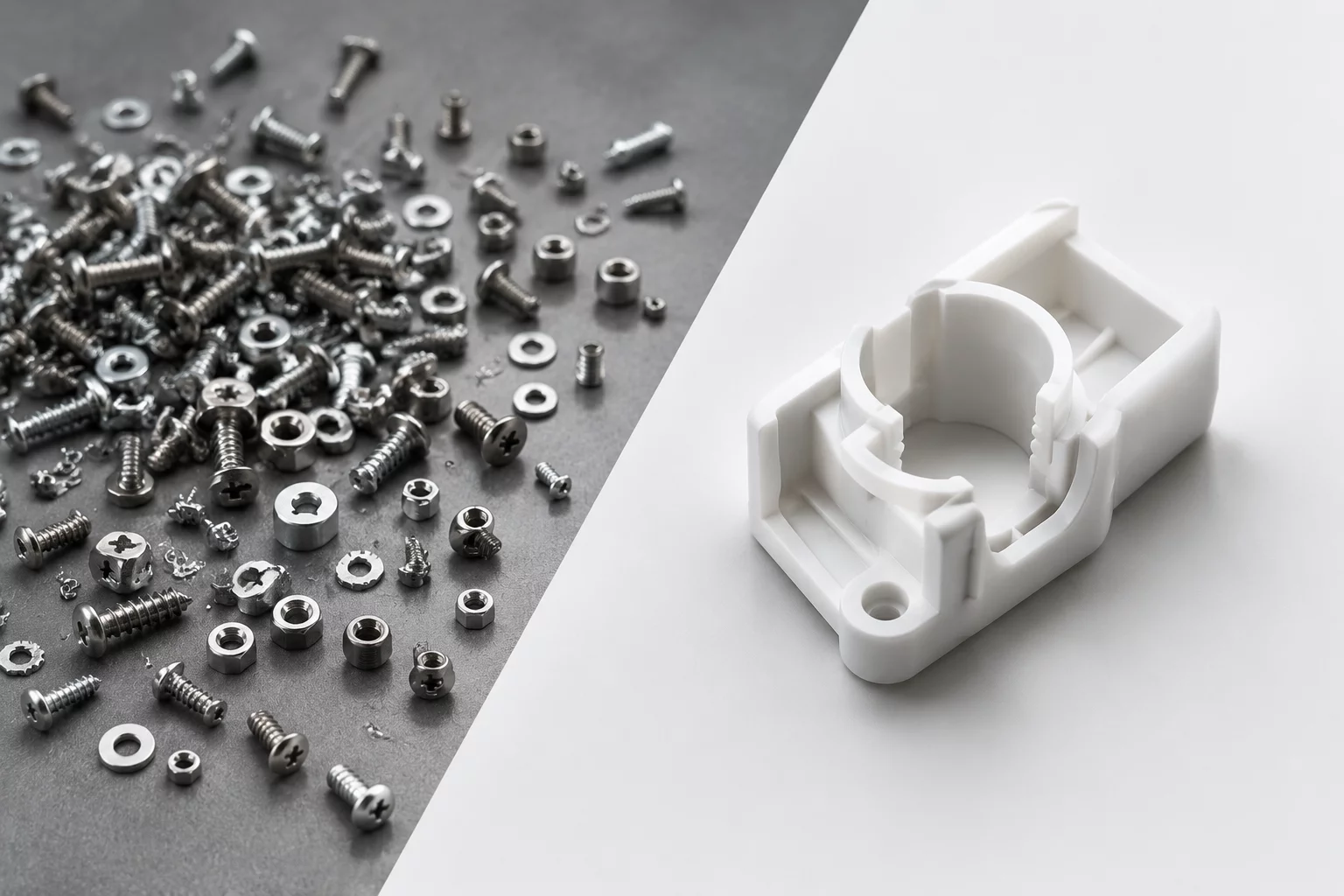
When components fail all three separation criteria, engineers integrate features directly into neighboring structural walls—substituting threaded fasteners with integrated flexural snaps, guide ribs, and self-locating alignment bosses.
Common Traps in Aggressive Part Reduction
Combining three simple sheet-metal brackets into one complex injection-molded housing often saves thirty seconds of factory assembly time. If your production volume is under 5,000 units, the $40,000 tool with multiple side-action lifters will never break even against hand-assembled stamped brackets. Volume dictates the breakeven threshold.
Consolidating distinct datum surfaces into a single monolithic part concentrates thermal shrinkage, warpage, and tolerance stacks onto one critical component. If one critical boss warps by 0.15mm, the entire large consolidated casting or molding must be scrapped.
Ultrasonic welding or solvent bonding multiple housings together eliminates fasteners completely, yet creates an impossible barrier for field technicians. If a consumable battery or motor cannot be accessed without destroying the outer shell, your warranty replacement costs will rapidly overwhelm the initial assembly savings.
Consult on Part Consolidation
Share your sub-assembly constraints and BOM metrics with our engineering mentors to assess parallel consolidation options.